


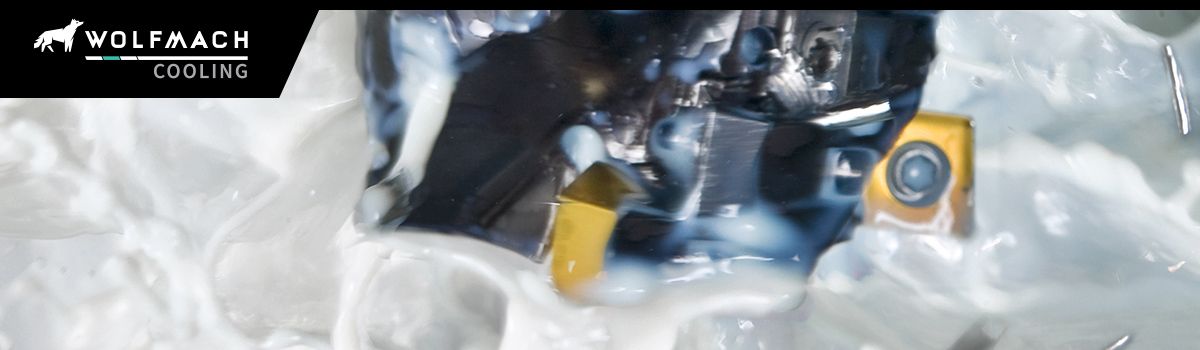
An interesting question we occasionally hear from customers is which is more important when choosing a cutting fluid – cooling or lubrication? For New Zealand engineering and fabrication companies, this decision impacts everything from tool life to surface finish quality.
Most Kiwi workshops run diverse operations - high-speed milling to heavy-duty turning, aluminium to stainless steel fabrication. Understanding which property matters most can mean the difference between burning through expensive tooling and achieving optimal productivity.
Does it really matter?
Well, whatever your supply, it might be clean but it will definitely not be pure. 100% pure water is so good a solvent that it picks up all sorts of chemicals from anything it comes into contact with, so much so that if you were to drink absolutely pure water it would probably kill you as it would quickly leach essential minerals from your body tissue! Your water supply will have its own unique combination of absorbed chemistry that it’s acquired on the way to your tap. Clearly then (no pun intended) not all water supplies will have the same properties, and this should be a factor when choosing the best cutting fluid so you really should check it, or have it checked for you.
What to Look For
There are certain properties of the water that may influence which cutting fluids would work best for you. Select the headings below to see more about each of these 3 easy tests.

Lubricity & Friction: All cutting fluids aim to reduce heat from metal removal. Heat is mostly generated by two factors: shearing forces at the tool's edge (molecular-level energy release as metal is removed), and friction forces between surfaces in motion (tool-chip, tool-workpiece).

Shearing forces generate less heat than friction forces. Cooling mitigates damage from shearing heat by removing heated chips from the cutting zone. Friction forces play the bigger role in heat buildup, potentially damaging tools through rapid heating as surfaces continuously form and break microwelds. This heat transfers directly to the tool and material and indirectly to chips and other surfaces.
Lubricity, the ability for a fluid to reach between the surfaces that would otherwise be in contact and thereby reduce the frictional forces involved, is key to limiting the heat buildup at source.

The Case for Cooling: High-Speed Operations: Cooling is critical when pushing high cutting speeds or working with heat-generating materials. In high-speed machining, temperatures at the cutting edge can exceed 800°C, causing rapid tool wear and workpiece distortion.

Cooling also prevents thermal expansion during precision machining. When machining to tight tolerances (±0.02mm), even minor temperature variations can push parts out of specification—particularly relevant for New Zealand's aerospace and medical device sectors.

The Case for Lubrication: Heavy Cuts and Difficult Materials: Lubrication becomes critical when metal-to-metal contact dominates, particularly during heavy cuts or working with difficult materials like stainless steel or titanium. These materials work-harden rapidly, and without proper boundary lubrication, friction forces generate excessive heat and tool wear.

For thread cutting, tapping, broaching, and form tooling, lubrication is essential. These operations involve significant sliding contact between tool and workpiece. Without adequate lubrication (achieved through higher lubricity), friction welding can occur between tool and work material, leading to built-up edge, poor surface finish, and tool failure.

Material-Specific Considerations: Your material mix should guide your priority:
- Alloy-dominant workshops need to prioritise cooling. Heat is still generated despite materials often machining more easily. Soluble oils with 5-10% concentration typically work well.
- Steel fabrication operations should favour lubrication. Mild steel, stainless steel, and alloy steels benefit more from boundary lubrication than aggressive cooling. Semi-synthetic fluids with strong EP additives are typically most effective.
- Mixed material workshops which form the majority of NZ fabricators need balanced fluids providing adequate lubrication for steel while maintaining sufficient cooling. Semi-synthetic fluids generally offer the best compromise.
The Practical Reality: Your material mix should guide your priority:
Most New Zealand engineering companies will achieve better results by selecting cutting fluids based primarily on lubrication properties while maintaining adequate cooling. Lubrication is harder to supplement than cooling, poor lubrication can't be fixed with increased coolant flow, while moderate cooling can often be compensated with increased flow rate, better nozzle positioning, or adjusted cutting parameters.
The exception is workshops with clearly defined operations: production shops running high-speed milling of free-cutting alloys should prioritise cooling, whereas workshops focused on heavy turning or boring in steel should select primarily for lubrication.
Conclusion
For the majority of New Zealand’s engineering and fabrication companies, lubrication should be the primary consideration when selecting cutting fluids, with cooling as an important but secondary property.
Remember also that the best cutting fluid is one that's properly maintained, correctly concentrated, and consistently applied. Even a perfectly selected fluid will underperform if contaminated, diluted incorrectly, or delivered inadequately to the cutting zone.
Our range of Altdorf soluble and MQL fluids allows you to select the ideal match for your operation. Along with our treatment and maintenance range, backed by our expertise in cutting fluids, we can also test your current coolant & water supply, recommend treatments and maintenance regimes, and find you the best cutting fluid option to improve your workshop efficiency.